The Car Subaru is the proud sponsor of the Upper Valley Humane Society. It's a natural fit - we are a pet-friendly dealership and over 70% of Subaru owners also own pets - more than any other manufacturer. Subaru of America is a national sponsor of the ASPCA, reflecting Subaru and their owners' active lifestyles, love of the outdoors, and community involvement.
Each year UVHS provides services to over 3,000 families across 100 communities in New Hampshire and Vermont.
UVHS has spent over 45 years setting the standard for a compassionate and humane community. Our innovative and leading edge strategies have received national recognition from American Humane, the American Society for the Prevention of Cruelty to Animals, and the Humane Society of the United States.
We serve our communities at the forefront of a growing movement in animal welfare providing care and resources for companion animals and families. For example, UVHS raised the bar for improving shelter animal outcomes by being first in New Hampshire to hire an on staff veterinarian specializing in shelter medicine. In addition to improving animal health, spay/neuter of animals before adoption more effectively addresses animal overpopulation.
Each week we will feature a Pet of the Week.
Please consider adopting a pet.
Travel Safely. Pet Tips & How To's...
Make your pet travel experience fun and enjoyable by following these simple, common sense tips:
- Safely secure your pet while traveling. An unrestrained pet can become a deadly projectile in the event of a sudden stop or crash, causing serious injury (even death) to passengers. For example, an unsecured, 25-pound dog in a 40 mph crash becomes a 1,000-pound mass (half a ton) flying uncontrollably inside the vehicle.
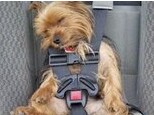
- Dogs should be restrained with either a seatbelt or harness designed for pet travel. Smaller dogs can be secured in pet car seats, which allow them to also see out, while being properly restrained.
- Never attach a restraining device to the pet's collar. Always use a harness to prevent injury.
- Cats should be contained in a crate, cage or pet car seat that is secured with a seat belt. Never allow a cat to roam freely in the vehicle, as it could get tangled around the driver's feet or get in the driver's sight of the road.
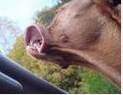
- Do not allow your pet to ride with its head outside of the window. An obstacle close to the vehicle could potentially strike your pet's head, causing injury or death, or dirt particles could get into your pet's ears, nose, eyes, or throat, causing health problems.
- It's a good idea to stop every couple of hours for your pet and you to stretch and walk around. Be sure to have your pet's leash handy to have control and so your pet doesn't run away in unfamiliar surroundings.
- Have your own supply of cold water, as fresh water is not always handy or convenient when you need to stop.
- Have your pet consume small amounts of food and water, but don't allow to overeat or drink if you still have more traveling to do. Reserve your pet's main meal for the end of the day.
- Leaving a pet in a parked car is never a good idea. Temperatures in confined spaces in the summer time can heat up fast, causing heatstroke ? even death ? to a pet. Extremely cold temperatures in the winter can be just as threatening, so be sure not to leave a pet in the car if the temperature is near the freezing mark.
- A pet first-aid kit is an essential item to pack when venturing out and should contain things such as antiseptic cream, assorted bandages, tweezers, eye drops, gauge, tape, and the like. Phone numbers for your pet's vet, the National Animal Poison Control Center hotline (888-426-4435), and emergency pet hospitals in the areas where you plan to travel should be taken along.
- A travel tag on a pet's collar will help someone locate you should you and your pet become separated. The travel tag should contain information about where you are staying locally (while away from home), including addresses and phone numbers. A cell phone number is also a good idea since most people have one with them, especially when they travel.



No comments:
Post a Comment