On this episode of Epic Drives, Associate Online Editor Nate Martinez tours Japan's greatest driving roads in Subaru's new rear-wheel drive BRZ coupe. Along the way, he tears up the Toyo Tires Turnpike, climbs Mount Fuji, dances down the hairpins of the Nihon Romantic Highway and drops the hammer at the tight and twisty Gunma Cycle Sports Center.
Thursday, June 28, 2012

Tuesday, June 26, 2012
Subaru Receives Top Grade from TrueCar.com Amidst Record Sales

Subaru earned an A+ in its May 2012 Performance Scorecard, while BMW fell into a tie for second with an A grade. Factoring into Subaru’s score were its record-breaking May sales, which were up 48 percent compared to the same month last year. Year-to-date, Subaru has moved 136,602 vehicles in the United States, a 22-percent gain compared to the same period in 2011.
Redesigned to become lighter, faster and more fuel efficient than previous models, the 2012 Subaru Impreza has been a popular item in showrooms since its debut last fall. Sales of the Impreza were up more than 235 percent in May year-over-year, moving 6,786 units. So far in 2012, Subaru has sold 34,677 units of the compact car, a 170-percent jump compared to the same period last year.
The Subaru Legacy sedan and Outback wagon also continued their strong 2012 sales performances last month, increasing by 23 percent and 9 percent respectively compared to May 2011. With 20,378 units tallied through May, sales of the Legacy are up 14 percent year-over-year. Meanwhile, sales of the volume-leading Outback have risen 3 percent in that same period, totaling 44,800 units.
As more buyers turn to Subaru vehicles, the automaker has created a new social guidebook on Facebook that allows owners and Subaru fans to share their favorite places and activities with each other. Called the Subaru Guide to Everything, the site allows users to post their top locations for hiking, camping and biking, as well as recommended dog parks and dining spots. It can be viewed at http://guidetoeverything.subaru.com/facebook.> “Every Subaru owner has a strong sense of adventure in one way or another, so there will be tons of great locations to be explored on the new guidebook,” added Dunn. “There are already several Massachusetts spots submitted by users that I’m sure our customers would love to check out.” Courtesy of Top Wire News

Monday, June 25, 2012
Your Monday Maintenance Tip: Checking Lights and Direction Indicators

SIDELIGHTS Two white at the front; two red at the back. Should be bright and of equal intensity. Look closely at the rear lights to see if there is a dim glow from 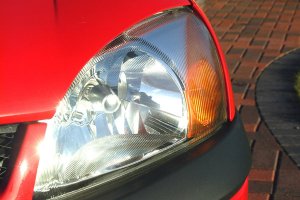 the brake lights, turn indicators or high-intensity fog lights — this may mean a poor earth to the car body on the nearest sidelight. If the front sidelights are small bulbs set in the headlight reflector these may be dim — these little bulbs tend to overheat and go black inside. Not a MOT fail point as such if they are both equally dim, but it's best to replace them.
HEADLIGHTS Put the headlights on dipped beam. Both should shine with equal brightness — failure to do so means a bad electrical supply or earth at that bulb. The reflection from the lights on a wall or garage door should show the two beams pointing slightly down to the left and level.
There are adjusting screws or knobs behind each headlight, but unless a beam is so far out of line as to cause a hazard, it is probably best to leave adjustment to the MOT tester, who will usually use a beam-setter to set them spot on. Switch to main beam and make the same check —
REAR FOG LIGHT(S) Switch on the high-intensity red rear light(s) — your headlights need to be on dipped beam. If fitted, fog lights must work, so must the interior 'tell-tale' light on the instrument panel.
DIRECTION INDICATORS Turn the ignition on and operate the indicators. Check that there is a flashing 'tell tale' light on the instrument panel. Check that front and rear indicators are flashing.
The flash rate should be between 30 and 90 per minute. If it's just under 30 it may speed up once the engine is running, though not if the flasher unit is an electronic rather than a mechanical unit. Side repeater indicators on the wings must be working if fitted.
HAZARD WARNING LIGHTS With the indicators off, switch on the hazard flashers, checking for the warning light and/or tick inside. Walk round the car to ensure that all four hazards are flashing, and that no other lights are glowing dimly. Switch off hazard flashers.
BRAKE LIGHTS Get a helper to operate the foot brake while you check the brake lights. Again, both brake lights must be equally bright, with nothing else glowing. Switch off the ignition.
LIGHTING REPAIRS If a light isn't working, chances are the bulb is blown. Bulbs are standard items, so replacement is easy. Indicators and rear red hazard lamp bulbs are 21 watt; brake light and rear tail light are usually a 21 and a 5 watt combined into one bulb. This only fits one way round to ensure the brake light is the more powerful. If it doesn't slip in easily, don't force it! Ensure that the offset pins match the slots in the bulb holder.
Front sidelights are either small bulbs set in the headlamp reflector, or larger bulbs (around 5 watts) under separate covers. Headlight bulbs come in various fittings and types, so take the old bulb along when buying a replacement. Access to the bulbs is gained by either unclipping the bulb-holder from the back of the light housing (usually after removing a cover) or by use of a number 2 Pozidriv (cross-head) screwdriver to unscrew the coloured lens from the outside.
If you have a vehicle handbook, it may show the correct procedure for removing and fitting bulbs. Other reasons for a bulb not lighting may be broken or badly corroded wiring. If one lamp lights up another, check for broken or corroded wires or a damaged lamp-holder and replace them. Many rear light units are mounted on a printed circuit board. If the circuit strips corrode, a new unit will probably be needed.
Front sidelights are either small bulbs set in the headlamp reflector, or larger bulbs (around 5 watts) under separate covers. Headlight bulbs come in various fittings and types, so take the old bulb along when buying a replacement. Access to the bulbs is gained by either unclipping the bulb-holder from the back of the light housing (usually after removing a cover) or by use of a number 2 Pozidriv (cross-head) screwdriver to unscrew the coloured lens from the outside.
If you have a vehicle handbook, it may show the correct procedure for removing and fitting bulbs. Other reasons for a bulb not lighting may be broken or badly corroded wiring. If one lamp lights up another, check for broken or corroded wires or a damaged lamp-holder and replace them. Many rear light units are mounted on a printed circuit board. If the circuit strips corrode, a new unit will probably be needed.
LENSES & REFLECTORS Headlamp reflectors must be bright and not obviously misted, tarnished or corroded. The headlamp lens should not have any hole or a crack that could let in water. All plastic lenses covering the other lights should be the correct colour and not excessively faded.
Courtesy of 2Pass
Friday, June 22, 2012
The Car Store's Summer Tire Special!

| ||||||
| Come join the celebration at The Car Store and simply print out this email to take advantage of this great tire offer! | ||||||
| ||||||
|
Tuesday, June 19, 2012
SUBARU PUMA RallyCross Team USA Ramped Up Competition at Inaugural Hoon Kaboom Texas RallyCross Race.

In the first heat, Sverre Isachsen led the pack off the line and drove his #11 Subaru WRX STI with vigor to secure a spot in the Main event with a second place finish in his heat. SUBARU PUMA RallyCross Team USA's Bucky Lasek finished fourth in the same heat and was seated in one of the two Last Chance Qualifiers (LCQ). Dave Mirra in the #40 WRX STI was also placed in an LCQ, where he put up a tough fight and finished in second position, just a few seconds short of advancing to the final.
Bucky Lasek provided the greatest spectacle of the heat races, and possibly the event, during the running of the LCQ B. After a tight start, Lasek was chasing Liam Doran whose ailing car was leaking fluids and slowing. After Lasek chased Doran through the chicane, Doran ducked to the left as though he was pulling off, Lasek went for the pass only to have Doran pull back in during the lead-up to the narrow steel jump. Having braked hard to avoid the car in front him, Lasek felt he had scrubbed too much speed to clear the jump and made the split decision to abort the jump and drive off the side of it. In an amazing maneuver more suited to a skateboard than his #80 Subaru WRX STI, Lasek rode the water barrier beside the jump on two wheels and stuck the landing!
Sverre Isachsen entered the 10-car Main event with the podium in his sights. Starting in the 2ndrow, the Viking Warrior muscled his way forward through the pack off the start and got alongside Marcus Gronholm. The two collided when Gronholm tried to duck into the Shortcut through Isachsen. The impact forced Isachsen unwillingly into the Shortcut and the sent him sideways into the grass, but he stayed on the throttle and continued, losing several positions in the process. Things really got tricky on the next lap when Isachsen was slowed by another competitor as they approached the jump "We were heading towards the big jump, when the car in front of me suddenly braked. I had two choices; I could hit him and crash both cars, or I could brake! I braked and stopped just before the end of the jump as I would not have cleared the gap,” explained Isachsen. The race was red flagged and Global Rallycross Officials would restart the Main but denied Isachsen the opportunity to continue in the event due to stopping on the jump. Isachsen pleaded with the Officials to no avail. Sverre remained confident in his decision and his future campaign in the #11 Subaru WRX STI as he stated, "I don’t understand why I wasn’t allowed to start again. All I did was try to avoid a big crash. But on the positive side the car was awesome today, and I’m really looking forward to the next race which is a part of X Games."
X Games 18 kicks off in Los Angeles on June 28 and runs through July 1. Similar to last year, the RallyCross course will run on the streets of downtown L.A. in the vicinity of the Staples Center. Summer X Games broadcast information can be found here.
Images of the Subaru PUMA RallyCross Team can be found here.
For additional information about Subaru PUMA RallyCross Team visit: http://www.subaru.com/rally. Become fan on http://www.facebook.com/subaruofamerica and follow @subaru_usa and @srtusa. #PUMAGRC
Courtesy of Subaru
Monday, June 18, 2012
Your Monday Maintenance Tip: What to Do If Your Car Overheats

If your car overheats, do not drive more than a quarter mile. Have it towed to avoid further damage to the engine. However, if there is no experienced mechanic or tow truck nearby, follow these simple steps:
• Pull over to a safe location and turn off the engine.
• Do not open the hood until the car has completely cooled or the temperature gauge has moved from hot to cool.
• Check the coolant (also called antifreeze) level in the radiator. Look in the owner’s manual if you are unsure where the coolant reservoir tank is.
• Make sure the radiator cap is cool before opening it. Slowly twist it off with a towel and beware of any hot steam. If needed, fill coolant to the top of the radiator. Put the radiator cap back on.
• Be sure the upper or lower radiator hose and any of the heater hoses have not been blocked, disconnected or burst.
• Restart the engine.
• Carefully monitor the temperature gauge. If you see it crossing the optimal mark, pull over to a safe location and turn the engine off.
While your best bet is to get help from a mechanic, your safest bet is to be prepared. Store these essential items in you car: Coolant, tool kit, working flashlight, non-perishable foods and water.
Courtesy of The National Safety Council
Thursday, June 14, 2012
Ad of the Day: Subaru

ometimes love takes you places you weren't quite expecting, says Subaru.
Maybe it's because you're a grounded wife chasing your roguishly obnoxious hot-air-balloon-pilot husband to wherever the wind happens to send him. Or you're a father trying to help his young daughter catch a better view of the rainbow she spotted somewhere over the hill.
Wherever it is, Subaru wants to get you there, according to two new spots in the automaker's "Love" campaign from Carmichael Lynch for the 2013 Legacy and Outback. (Six more ads are forthcoming.) These first two ads, which play up the brand's off-road capabilities, are well produced but a little contrived. "Rendezvous," in particular, takes too fantastical a trip to be convincing and ends up feeling strained. "Looking for Gold," meanwhile, stays closer to reality, and while a bit sappy, is understandably so—maybe even resonant. It's also a nice extension of the campaign's father-daughter dynamic, previously in the brand's Emmy-nominated "Baby Driver" spot from 2010—and another reflection of advertising's broader shift away from doofus dads.
Still, as car ads go, neither spot strays far from the beaten path.
CREDITS
Agency: Carmichael Lynch, Minneapolis
Chief Creative Officer: Dave Damman
Executive Creative Director: Randy Hughes
Copywriters: Conn Newton, Ellie Anderson
Art Directors: Michael Rogers, Brad Harrison
Director of Integrated Production: Joe Grundhoefer
Executive Senior Producer: Brynn Hausmann
Business Manager: Vicki Oachs
Account Service Team: Andy Gorski, Kristen Stengel
Production Company: Gorgeous
Director: Vince Squibb
Executive Producers: Paul Rothwell, Jeff Baron
Line Producer: Rupert Smythe
Director of Photography: Alwin Kuchler POSTPRODUCTION
Edit House: The Whitehouse
Editors: Stephen Jess, Rick Lawley
Assistant Editors: Alejandro Villagran, Shane Reid
VFX House for "Looking for Gold": The Mill
VFX House for "Rendezvous": Randy Gackstetter, Volt
Online Artist: Steve Medin, Volt
Telecine: Sean Coleman, Company 3
Audio Mix, Sound Design: Carl White, BWN MUSIC
Title for "Looking for Gold": "Won't Let You Leave," Jenny O.
Title for "Rendezvous": "Going Somewhere," Gareth Dunlop
Music Supervisor: Jonathan Hecht
Composer: Gareth Dunlop ON-CAMERA TALENT
"Looking for Gold": Andrew Miller, Bluesette Miller
"Rendezvous": Barry Sherman, Brynn Horrocks, Emily Yancy, Cedric Scott
Voiceover: Justin Beere
Courtesy of Adweek
Tuesday, June 12, 2012
Fuji Heavy mulls new Subaru plant In U.S.: report
TOKYO (MarketWatch) -- Fuji Heavy Industries Ltd. , the maker of Subaru brand cars, is considering building a new plant in the United States to begin operating possibly in the fiscal year starting in April 2015 after facing difficulty launching production in China, Kyodo News reported Friday, citing sources familiar with the matter.
By investing about Y40 billion, the automaker aims to construct a plant capable of producing 100,000 vehicles a year on the premises of an existing plant in Indiana to meet strong demand in the country, the report said.
Fuji Heavy President Yasuyuki Yoshinaga said last month the company will prioritize beefing up production in the United States, deeming it is difficult to set up a joint venture and start production in China as its authorities have not yet accepted its application.
Fuji Heavy, which produces automobiles in Japan and the United States, has seen a shortage of stock amid robust sales of its mainstay Legacy series and the Impreza compact car. Faced also with a strong yen that eats into exporters' profits made overseas, the automaker came up with the plan to expand production in the United States.
Courtesy of MarketWatch
Monday, June 11, 2012
change a tire

Sooner or later, it's bound to happen to most everyone. You're driving along with your mind on the important meeting agenda, and suddenly your car pulls to one side and you hear that dreaded flapping sound of a flat tire.
Nowadays, many drivers have roadside assistance services that will come fix your flats, but it's always smart to know how to change a flat yourself. Because it's a fairly common occurrence, car manufacturers have tried to make the tire change process one that virtually anyone can do.
Before Starting Out
It's a good idea to get your car serviced before heading out on a road trip. Part of the checkup should include a look at the tires.
Look for any unevenly worn spots, or skimpy tread. If the tires are iffy, invest in new ones. You'll need them eventually anyway, and it's better to start out on a trip with new tires than have a blow-out in the middle of nowhere.
Even if you're not heading on a trip, you should familiarize yourself with the tools you'll use in the event of a flat tire. Most cars come equipped with a simple jack and lug wrench, as well as a spare tire. Check your owner's manual if you aren't sure how to access these items.
Pull out the jack and the tire, and make sure the tire is in good shape. If your spare is flat, get it fixed.
It only takes a few minutes to make sure you have all the tools, and you'll save yourself a big headache later if you find yourself on the side of the road with a flat.
Optional Items to Pack
Besides the crucial jack, wrench, and spare tire, you might also want to consider placing these tools in your trunk to make a tire change much easier and more comfortable:
- Flashlight (with extra batteries)
- Gloves
- Tarp or mat to kneel on
- Plastic rain poncho
- Fix-a-flat™ spray foam
- Tire gauge
- Tire blocks
Changing a Flat Tire
Follow these simple steps to fix the problem and be on your way in no time:
- Find a safe spot to pull over. If you're on the freeway, getting off is the safest bet, even if you have to drive on a blown tire. Otherwise, pull as far onto the shoulder as possible. Don't park in the middle of a curve, where approaching cars can't see you. Also choose a flat spot; jacking up your car on a hill can be a disaster. If you have a manual transmission, leave your car in gear. Be sure to set your parking brake!
- Turn on your hazard lights. Get the jack, wrench, and spare tire from the trunk of the car and bring them over to the tire that is flat. Use other tools or supplies if needed.
- Use the wrench to loosen the lug nuts. You may need to remove the hubcap. Don't remove the lug nuts at this point; simply loosen them by turning the wrench to the left (counter-clockwise). If the lug nuts are really tight, try placing the wrench on the nut and standing on the wrench arm to use your full weight on it. You can also try hitting the wrench arm with a rock.
- Use the jack to lift the vehicle off the ground. Different car models may have different places to put the jack; consult your owner's manual for specific locations. Once the jack is securely in the correct spot, jack up the car until the tire is about six inches off the ground.
- Remove the lug nuts and pull the tire off the car. Make sure to place the lug nuts in a pile that won't get scattered, and pull the tire straight toward yourself to remove it from the wheel base.
- Place the spare on the car. Line up the lug nut posts with the holes in the spare, and push the spare all the way onto the wheel base until it can't go any farther.
- Put on the lug nuts. Don't put them on tightly, just make sure they're on enough for the spare to stay on the car for a moment.
- Lower the car back to the ground. Use the jack to bring the car back down to ground level. Remove the jack from underneath the car.
- Make sure the lug nuts are tightened. With the car back on the ground, you can now tighten the lug nuts. Rather than tightening them one by one in order, start with one lug nut, tighten it about 50%, move to the opposite nut (across the circle) and tighten that one about the same amount. Keep tightening opposite lug nuts gradually in turn until each lug nut is as tight as it can be.
- Put your flat tire and tools back in your trunk. Make sure you don't leave anything on the side of the road.
Quick Fixes
Once in a while, a tire isn't completely destroyed when it goes flat. If the flat is caused by a nail or other sharp object, and you can't or don't want to change your tire on the side of the road, you may be able to give yourself a few miles of leeway by using a flat-fix type spray.
Simply follow the manufacturer's directions. In ideal situations, the spray foam will allow you to at least find a close off-ramp and pull into a service station or a rest stop before you have to change your tire.
Courtesy of DMV.org
Tuesday, June 5, 2012
Subaru of Indiana named first U.S. auto plant to meet ISO 50001 energy standard
Subaru of Indiana Automotive Inc. in Lafayette was recognized Monday for its heightened commitment to energy conservation that could help the car manufacturing plant save costs and reduce emissions.
SIA is the first U.S. car manufacturing plant to become certified in energy management, which means it complies with the International Organization for Standardization’s global standards — meant to increase a company’s energy efficiency.
“(The certification) is a culmination of a lot of hard work and dedication,” said Thomas Easterday, SIA’s executive vice president. “Over the years, Subaru has been well-known to be a leader. Right now, we’re taking an even bigger step.”
The SIA team spent six months monitoring energy consumption data in order to figure out how to improve its current processes to gear up for an audit by DEKRA Certification Inc., a company that provides professional certification in the automotive industry.
The Journal & Courier requested energy consumption data, but it was not released as of Monday night.
DEKRA President Henri Pierre Salle, who presented top executives from Subaru SIA with the ISO 50001 certification at a gathering on Monday, said the purpose of the certification is to provide an energy management framework for companies.
“A process of improvement becomes part of the everyday culture,” Salle said. “That spirit and culture already is here in the Subaru culture.”
Auditors who worked with SIA plant managers to collect the data said SIA’s commitment to saving energy is high compared with other large companies they have visited, Salle said.
Auditors noticed a particular attention to energy conservation in Subaru SIA’s painting and trimming processes, which account for more than 40 percent of the plant’s total energy consumption.
“The auditors noticed a clear commitment to energy consumption that was very robust,” Salle said. “They don’t casually make that kind of comment.”
Auditors will return to SIA at least once a year to make sure the plant is living up to the certification’s standards by testing random processes .
In November, a Bentley plant in England was the first car manufacturer in the United Kingdom to receive the certification. In October, a Lamborghini plant was the first in Italy to attain it.
SIA President and CEO Masaki Okawara said the new certification helps SIA maintain its leadership in the car manufacturing field.
“Environmental leadership is a very important business goal,” Okawara said. “This will help us reach and maintain that goal.”
Courtesy of JC Online
Monday, June 4, 2012
Your Monday Maintenance Tip: Sunny Day Driving Safety
To see your way clearly
- You could wear Sun glasses or draw down the window-shade when the sunlight is too strong to make sure you can see your way clearly.
Prevent Engine Overheating
- Engine Overheating may cause breakdowns, especially on a hot day.
- Check the level, condition, and concentration of the coolant periodically.
- If your car overheats, do not drive any more.Never remove the radiator cap until the engine has thoroughly cooled.
Pay Attention To Tires
- Check your tires regularly
- Be sure the tires are properly inflated
- Don’t drive at a high rate of speed for a long time,particularly in hot weather
- Do not overload your car
Courtesy of Car-Use.net
Thursday, May 31, 2012
Tuesday, May 29, 2012
We appreciate our fantastic customer feedback! Thank you to our happy customer for the kind words.

Wednesday, May 23, 2012
The Car Store - Memorial Day Sale

| |||||||||||||
|
Tuesday, May 22, 2012
BMW and Subaru Take the Lead in TrueCar's May 2012 Performance Scorecards for Manufacturers and Brands
BMW, Subaru, and Jaguar / Land Rover Receive Top Grades by Manufacturer
SANTA MONICA, Calif., May 18, 2012 /PRNewswire/ -- TrueCar.com, the authority in new car pricing, trends and forecasting released its Performance Scorecards for automotive manufacturers and brands. The Performance Scorecards grade each manufacturer and brand on eight different measurements including pricing, sales, incentives, customer loyalty, market share, and days in inventory.
Overall, the top manufacturers on the Scorecards in April were BMW, Subaru, and Jaguar/Land Rover.
<div class="rpuEmbedCode">
<!--rpuEmbedStart-->
<script src="http://1.rp-api.com/rjs/repost-article.js?3" type="text/javascript" data-cfasync="false"></script>
<div class="rpuArticle rpuRepost-f4da4be218bcbec3e11e8aa8f4fa00ff-top" style="margin:0;padding:0;">
BMW and Subaru Take the Lead in TrueCar's May 2012 Performance Scorecards for Manufacturers and Brands (via PR Newswire)
<p class="rpuSnip">
SANTA MONICA, Calif., May 18, 2012 /PRNewswire/ -- TrueCar.com, the authority in new car pricing, trends and forecasting released its Performance Scorecards for automotive manufacturers and brands. The Performance Scorecards grade each manufacturer and brand on eight different measurements including…
</p>
</div>
<!-- put the "tease", "jump" or "more" break here -->

Monday, May 21, 2012
Your Monday Maintenance Tip: Driving in High Wind Conditions
Driving in high winds can be dangerous and even more hazardous because of the other weather conditions that normally accompany them. Extreme caution should be used when driving a car in any type of severe weather.
- Be aware of the other vehicles around you in high winds. This is especially true with RVs, campers, trucks, buses, or trailers being towed.
- Slow down the speed of your car to minimize the wind’s affect on your vehicle.
- Avoid parking near trees, downed power lines and buildings.
- The main factors that keep you on the road are the weight of your vehicle, so if you are driving a little city-car along the motorways in the high winds,you should be more careful.
- Plan ahead. As you have to drive more slowly in high winds you should expect your journey to take longer than usual and therefore leave extra time. You definitely don’t want to be speeding to make up the time!
- Make steering corrections when driving from a protected to unprotected area. This is because the wind may move your car with a sudden force after being in the protected area.
- Lower your speed when driving next to larger vehicles such as trucks and buses. These vehicles can swing out and hit your car if the wind picks up suddenly.
- Listen to the radio for changes in weather conditions that could become more dangerous.
- Wind is often accompanied by heavy rain or winter precipitation. Stay alert for slippery areas.
-
Courtesy of Car-Use.net
Thursday, May 17, 2012
On The Road Review: Subaru Legacy
Ssshh, quietly now, one of the most subtle success stories in the American auto industry is taking place and practically no one is noticing. Except of course, the principals involved, who are jubilant beyond belief — as they should be. That old, reliable, under-the-radar brand from Japan, but with cars built here in Indiana, is making a run at eclipsing some of its other niche competitors. Yes, Subaru is on a roll — a big roll — and most people don’t even know.
Numbers matter — and big numbers matter more. The accounting side of business, work and government is the metric for measuring success, or failure. It can be nasty, the whole business scenario, but if you don’t know the numbers you can’t be a player, you can’t bargain, you can’t succeed.
So it is quite significant that Subaru has flown under the radar screen and has, so far this year, beaten the total sales of Chrysler, Ram Trucks, Mercedes, BMW, Lexus, Buick and a whole lot more automakers. It doesn’t seem like Subaru is just a regional brand anymore.
Key to this success — the highest sales levels ever recorded by Subaru in the American market — are several small significant points.
First Subaru worked to revise its exterior styling to come somewhat closer to the domestic-norm, while still evoking some unique Subaru-esque qualities. Secondly, Subaru decided that its interiors needed serious updating in both efficiency and levels of refinement. While not yet a threat to Audi, the folks at Subaru need not be embarrassed anymore. And thirdly, while it was paramount to maintain its quirky boxer-engine layout and full-time all-wheel drive (more about this in a minute), Subaru has been smart enough to recognize that the market was going to want greater fuel efficiency in its cars at some point. That time has arrived and several Subarus have marked increases in EPA economy ratings.
Many of these revisions hearken back to 2009 when Subaru rolled out the latest Legacy sedan, a larger, more mainstream offering that shouted to the class stalwarts that the brand didn’t want to play around the midsize segment perimeter anymore.
And while Legacy sales have improved, the other products in Subaru’s lineup have, too, so the Legacy — once the main product — is now the slowest selling car of four. Only the dated Tribeca midsize crossover sells slower than the Legacy, leaving the Outback, Forester and all-new Impreza out front of the company’s four-door sedan.
With over 80,000 new cars sold in the first three months of the year, a healthy 17 percent gain over last year at this time, Subaru is unveiling two more entries to its lineup. Unveiled in April was Subaru’s first rear-drive-only car, a sporty 2+2 coupe built with Toyota called the BRZ. Expecting to cost around $25,000 to start, the BRZ will offer handling like Mazda’s Miata, but with a fixed roof. Subaru is also planning a sportier, more rugged compact crossover based on the Impreza platform for early this fall.
The Legacy made a big splash when it debuted three years ago because it was so — conventional. A Legacy GT sample with the five-speed manual transmission was fun to drive, roomy inside and nicely appointed. It was what the market asked for, a Legacy that was closer to a Camry or Accord, yet it still offered all-wheel drive.
Unfortunately, the new car market was in the midst of a three-year swoon during the height of the recession and the Legacy didn’t have the legs to carry it to the top of the midsize segment — or the middle for that matter. Still, critics adored the newest Legacy and Subaru built on those acclaims and was able to sell more of everything — except the Tribeca.
Now, we get the chance to drive the premium R sedan with the larger 3.6-liter flat-six engine. With 86 horsepower more than the base 170-hp boxer four engine, the 3.6R has some serious punch on tap, yet the car is not the hot ticket for best performance. That model is the Legacy GT with a turbocharged version of the 2.5-liter four, an engine that punches out a raucous 265 hp with a six-speed manual transmission to keep sporting drivers engaged.
The main attribute of the 3.6-engine is midrange torque, which the six-cylinder has in greater reserve than the base motor. Fuel economy, as you might expect, is lower; 23/31-mpg for the base 2.5-liter boxer engine, 18/25-mpg for the larger six-cylinder.
Otherwise, the 3.6R delivers a similarly composed ride compared to the 2.5-model cars, yet the handling seemed less precise, less agile to a notable degree. The 3.6R is a few hundred pounds heavier and that weight seemed evident all of the time you are driving the 3.6R. Traction and grip were never a challenge, and body lean is well damped. But the lithe moves that the 2.5i delivered three years ago were but a fond memory while piloting the heavier 3.6R.
The Legacy offers comfortable seating and good interior spacing. Tire thrum, however, was often evident, while the stereo system seemed to need a bit more beef to overcome the ambient sound levels on the road. Stereo operating buttons, though, were larger and more convenient to use here, overcoming a gripe that has often been shared about other Subarus.
The optional navigation system is integrated into the display screen for the audio system. This requires that you acknowledge use of these components every time you start the car, forcing you to make two punches on the screen or the panel goes blank. This is not forward progress for in-car electronics and the lawyers that mandate these acts for self-preservation should be forced to shovel horse manure during holiday parades.
Legacy pricing starts at $19,995 for a 2.5i with a manual gearbox. Add $1,000 for an automatic. The best-selling 2.5i Premium lists for $22,295 and is a better buy since it includes the automated CVT transmission. The 3.6R begins at $25,095 while the 2.5 GT is $31,595. Actual mileage during the Legacy’s visit ranged from 23.5 mpg to 26.1 mpg.
In a world where we talk good, better and best, the Legacy is better than ever before, yet not the best in its class. It is a very good car in search of some more tinkering and evolving. Perhaps the anticipated DNA of the BRZ will trickle into the Legacy and it too will help the brand achieve its secretive sales goals.
Courtesy of FenceViewer.com
Wednesday, May 16, 2012
The Car Store - May Finance Specials
Low Interest Financing on all 2012 Subaru!
Click Here to contact our Finance Department and let us show you the savings you will receive over the life of your loan!


Tuesday, May 15, 2012
New 2.0-liter turbo ready for next-generation Subaru WRX and BRZ

Turbo Torque recently reported that Subaru is working on a faster version of the BRZ, but not to look for a factory equipped turbocharged version in the Valley anytime soon as it only recently made it's debut in the Japenese market. However, Car and Driver reported we could be seeing what kind of a supercharged engine that Subaru will be putting in the the BRZ and the WRX in the future and it's fun to 'be in the know' in the meantime!
Subaru has developed the first supercharged version of the 2.0-liter FA-series four-cylinder naturally aspirated engine that is now used in the 2013 Subaru BRZ and the Scion FR-S. Reports say the new turbocharged engine will develop an impressive 296 horsepower and 295 pound-feet of torque. This is significantly more than the current 200 horsepower boxer engine we see in the 2013 Subaru BRZ says Turbo Torque.
If you have not had the chance to drive the limited BRZ, don't wait! These vehicles are limited and in high demand! Contact our sales staff and make an appointment for a test drive or to reserve your next new vehicle today! Please remember availability is limited and The Car Store will make every effort to put you behind the wheel of this new to Subaru model. Contact bcd@thecarstore-vt.com for more details!
Monday, May 14, 2012
Your Monday Maintenance Tip: Caring for Windshield Cracks and Dings

Warmer weather also means running the air conditioning. "The shock of quickly going from hot to cold stresses a windshield and causing that ding to suddenly become a cracked windshield," says Jim Olson, director of national accounts and brand awareness for NOVUS® Windshield Repair.
Here are some tips if you have a ding or star on your windshield:
Inspect the ding. If it has a cone shape, a circle deep in the glass or looks like a small star with points spreading out, have the ding repaired promptly. These are serious dings that can grow into a cracked windshield.
Don't touch a ding or attempt to repair it yourself. Without special equipment and training, you will only contaminate the damaged area, making repairs hard to complete.
As a temporary measure, put a piece of clear tape, like packing tape, over the ding. This won't keep the ding from spreading, but will help prevent contamination.
Don't wash the vehicle-especially through the car wash. Soap and water can contaminate the spot and a high-pressure wash can cause the ding to expand.
Driving a vehicle with a windshield ding causes vibration and exposure to the elements cause the ding to spread.
Avoid slamming the car doors and don't close the doors with the windows rolled all the way up. The vibration or buildup of air pressure inside the car can cause the ding to spread.
Don't run the defroster, heater or air conditioning on high settings. Don't park the vehicle in the sun. Rapid changes in interior temperature or prolonged exposure to sunlight can stress and weaken the windshield.
Source: NOVUS via Road & Travel Magazine
Thursday, May 10, 2012
David Higgins wins his fourth Oregon Trail Rally

Subaru Rally Team USA's David Higgins, along with co-driver Craig Drew, won 12 stages out of 16 to win his fourth Oregon Trail Rally.
Higgins never trailed in the rally even when he shot off the road at high speed and bent his rear control arms. The team managed to finish the stage and hobbled to the service center for repairs.
“I thought I was done for when I went off,” said Higgins, “but my team got me back on the road. I couldn't have done it without them. I'm so proud to win four Oregon Trail Rallies. I'm getting up there with Ken Block in wins at single events.”
Notably, Higgins' closest rival, the Rockstar Energy Drink Rally Team's Antoine L'Estage and Nathalie Richard, needed to bounce back from a DNF at the second round of the Rally American National Championship. At the Oregon Trail Rally the team dogged Higgins until when a few turns into stage seven, the car stopped. They were unable to continue, and a second DNF severely complicated their chances for another Rally America title.
The overall podium and class podiums were filled by many new Rally America drivers and teams. Canadian Rally Championship regular Leonid Urlichlich with Carl Williamson drove their 2007 Subaru STI to second place overall for his first American podium finish 4:25.9 minutes behind Higgins.
The 2011 Rally America rookie of the year Adam Yeoman, with co-driver Jordan Shulze, stepped up to the overall podium by finishing third for the first time in his Rally America career. He finished 10:20.2 minutes behind Higgins.
The Super Production (SP) Class was won by Belgium Group N Champ David Sterckx, with co-driver Karen Jankowski, for their first SP podium in just three U.S. events. Sterckx edged local Hood River driver, Dave Henderson, with Terrence McDowell, by 30.9 seconds. This was Henderson's first second-place podium in his SP Class car.
Chris and Lori O'Driscoll rounded out the SP Class podium finishing 7 minutes 52 seconds from the class leader.
In their first American competition, Australians Will Orders and Toni Feaver battled furiously to win the Two Wheel Drive (2WD) Class by 1:44.3 over 2WD regulars Andrew Comrie-Picard and Jeremy Wimpey. It was a close competition between Orders and Comrie-Picard until the longer, faster stages on day three gave the Nissan-driving Australians an advantage.
It's amazing. The Nissan was so fast out here and the roads were incredible,” exclaimed Orders, “I can't wait for the next round at the STPR Rally.”
Edward McNelly and Ole Holter bounced back after a rollover in Missouri last February to complete the 2WD podium in their 2011 Ford Fiesta R2 and their first podium this season.
The 2WD class is proving to be highly competitive during this year's Rally America National Championship. Orders finished fourth overall and Comrie-Picard took fifth overall, beating the more powerful 4WD machines in the process.
Adam Yeoman was the only American-born driver in the top five, joined by a Manxman, an Australian and two Canadians.
The Oregon Trail Rally, the third round of the Rally America National Championship, was once again a notoriously tough three-day event that began at Portland International Raceway for a fan- friendly, four-stage night. The event moved to the fast, sweeping farmland and roads near the Dalles and Dufur, situated under Mt. Hood, for Saturday and Sunday.
Tuesday, May 8, 2012
First drive: 2013 Subaru BRZ

As most Porsche and Subaru drivers know, the boxer engine got its name by the movement of its pistons. Unlike every engine you, I or our ancestors ever tore apart, the cylinders that house the pistons in a boxer engine — be they four or six — do not form the familiar V.
Rather, boxer pistons move much like the gloves of Muhammad Ali and Joe Frazier, each man with his back to the other throwing continuous jabs to the ropes. Each stroke of the combustion cycle is like Ali throwing punches on one side, Frazier on the other, except with infinitely more consistency and intensity if not equal finesse.
The boxer architecture is square, able to lower the mass of the engine, not just improving handling by moving weight lower but also resulting in an uncanny smoothness due to the cancelling out of opposing forces. If the engine is the heart of the car, the boxer is the kind that will withstand the most rounds in the ring while never really breaking a sweat. First patented by Karl Benz, the boxer engine is only one of four that have a natural dynamic balance, the other being the straight-six favoured by BMW, the V12 and the wankel. In a way, it’s almost magical.
Subaru and Porsche, the only automakers to routinely use boxer engines, have long enjoyed the beauty of the flat-four and flat-six. It is also why Subaru’s new BRZ rear-wheel-drive sports car beats with a specially developed 2.0-litre boxer engine, purposely engineered for the BRZ (Boxer, Rear-wheel-drive Zenith) and Toyota’s Scion FR-S. The engine may produce only 200 horsepower, or 100 hp per litre, but its delivery is as shrewd as Don King negotiating a title match, able to manipulate the 150 pound-feet of torque to make the car feel almost as if there’s a turbo lurking beneath that long aluminum hood.
Driving the BRZ through the twisting canyon roads of Oregon for several hours, it became clear that this boxer engine is a sweetheart. While able to redline at 7,450 rpm, the power arrives much earlier, starting at around 3,500 rpm. The smoothness of the boxer engine is obvious, but you can also get a sense of the inherent mechanical workings of the engine by the way it sounds and feels, giving the driver a level of intimacy so seldom felt in modern sports cars. Coupled with the car’s light weight of 1,255 kilograms (44 kg less than a Civic Si), the 200 hp easily motivates the BRZ up hills and through sweeping bends. It’s only when passing at high speed that a little more power would be welcomed (possibly reserved for a future STI model).
Regardless, the true delight of this car is its handling, so pure is its response. The BRZ’s steering, through a fat, 36.6-centimetre wheel turning with a 13:1 ratio, feels utterly connected to the road and to the car. It seems perfectly weighted and quick to turn in, never keeping any secrets should understeer set in, which it rarely did at Oregon Raceway Park, where I pushed the BRZ as fast as it could possibly go.
Even though the car has an ideal weight balance of 53-47 biased to the front, the BRZ was more likely to oversteer as it exited a corner. The 215/45R17 Michelin Primacy tires that all BRZ models wear over 17-inch alloy rims tended to hold the car better than expected for a rear-wheel-drive vehicle. Pushed quickly out of a corner, the rear tires gave up only a little as full throttle was applied with the traction control off. Understeer rarely showed up. The car’s beautifully arched front fenders, visible from the driver’s seat, made pointing the car wherever I wanted it to go as easy as sending a Labrador after a Frisbee.
Indeed, lap after lap in the BRZ proved that it only wants to have fun, that the only way to ever encounter trouble is to do something seriously egregious. Driven smartly, however, the BRZ responds with a delightful sense of playfulness and purpose, holding itself up with considerable composure through the corners, diving quickly into sharp turns, revealing itself as a car with a truly enjoyable character. In other words, it’s an honest-to-goodness sports coupe.
That, of course, did not come by luck. In the BRZ, the engine sits lower (by 120 millimetres) and further back in the engine bay than the Impreza. The crankshaft was lowered, too. The car’s centre of gravity is 460 mm from the ground, lower than a Porsche Cayman’s. The battery was moved back near the firewall, the starter motor and power steering motor strategically located, such were just some of the measures taken to make the BRZ one of the best-handling cars one can buy for $27,295.
That price is for a BRZ equipped with a six-speed manual transmission. An automatic is also available. While the six-speed manual and its short-throw shift lever feels almost like the manual in a Nissan 370Z but with an easier clutch, the six-speed automatic comes with a Sport mode for sharper shift points, along with a manual mode controlled by paddle shifters that will blip the throttle on downshifts to rev match the engine with the lower gear. With the six-speed automatic, the base car rises to $28,495.
The BRZ’s agreeable price doesn’t mean Subaru cheaped out on the interior either. While there was noticeable road noise in the base model car and some wind noise, too, the cockpit is dressed in decent soft-touch materials and good-looking gauges, aluminum pedals and a proper centre-mounted tachometer inset with a digital speedometer, much like the way Porsche does it. The sport seats in cars with the Sport-tech package wear leather, Alcantara inserts and coloured stitching; just don’t expect two adults to fit comfortably in the rear. Heated seats, however, only come with the Sport-tech package, which also adds fog lights, a tasteful body-coloured rear spoiler, dual zone auto climate control and smart key with push-button ignition. Still, the cost of the BRZ with this only option package is $29,295 for the manual and $30,495 for the automatic.
Yes, the base BRZ does sell for $1,305 more than its twin, the Scion FR-S, but the BRZ includes such standard items as LED lighting, HID headlamps and touchscreen navigation that includes Bluetooth phone and audio. And it was Subaru that did the majority of engine and powertrain development, leaving the styling aspects to Toyota (which owns about 16% of Subaru), so the BRZ’s DNA is more aligned with Subaru.
Built in Subaru’s Gunma, Japan assembly plant, the BRZ will undoubtedly reveal to the world that Subaru is not just about sensible, all-wheel-drive Outbacks and Legacys. The BRZ will prove that Subaru does indeed have a sexy side, one that doesn’t need a single Sumo wrestler to help sell its cars.
Monday, May 7, 2012
Your Monday Maintenance Tip: Cold Facts About A/C Refrigerant

In the past few years, many owners have discovered that fixing an inoperative air conditioner can cost a few hundred dollars or more, depending upon the make and model of vehicle. The reason is that the old standby R-12 refrigerant, trade named DuPont Freon, has been replaced by R-134a. Touted as being environmentally safer than its predecessor, R-134a has been standard since ’94.
If your older vehicle needs major repairs to the air conditioning system you can expect to replace refrigerant and the oil in the compressor in addition to the old components. You also may need to install a retrofit conversion. Do not allow anyone to mix refrigerants. They’re not inter-changeable. You cannot add R-134a to your older air conditioner without first flushing the system. Further, according to the Car Care Council, some substitutes are volatile mixtures of propane, butane and flammable hydrocarbons. Keep in mind the fact that if your vehicle is leaking refrigerant, you’re damaging the ozone layer.
An annual inspection of the vehicle, including the air conditioning system, may help forestall costly repairs. Ask your service center to evaluate your system before those hot and humid days of summer.
Courtesy of CarCare.org
Thursday, May 3, 2012
Subaru Road Racing Team Reaches Podium at Miami GRAND-AM Race

Spaude, of Bushnell, Fla., qualified the #35 SRRT WRX STI on the front row for the race, comprising of a massive 67-car starting grid encompassing two car classes, and kept the WRX STI in the lead for 19 laps around the 2.3-mile combination NASCAR-style banked oval, and flat infield road course located just south of Miami, Fla.
While running in a comfortable 10th place on lap 30 of 82, Spaude handed driving duties over to teammate Andrew Aquilante of Chester Springs, Pa., who brought the distinctive #35 WRX STI to the checkered flag in third-place after making numerous exciting on-track maneuvers.
“The varying weather conditions throughout the race posed a challenge, but our car performed flawlessly all weekend; plus our pit stop strategy proved to be the right one, said SRRT owner Joe Aquilante, principal of Phoenix Performance in Phoenixville, Pa., where the SRRT Subaru is prepped and maintained. “We can’t wait for the next round which is at our home racetrack in Millville [New Jersey].”
Added team driver Bret Spaude, “I enjoyed a great first stint and didn’t feel much of any pressure [from the competitors] from behind in the wet [conditions]. Our WRX STI really stuck well in the corners, and I was able to keep the lead right up to my first pit stop.” After handing off the car to his teammate, “AJ [Aquilante] picked up right where I left off and made some incredible passes to help us get onto the podium.”
Aquilante and Spaude were among 67 cars entered in two classes in GRAND-AM Road Racing’s largest participatory series.
“We’re pleased to take away a podium finish from the Homestead round, our team has been working hard in tapping the performance potential of our Subaru WRX STI,” remarked James Han, motorsports marketing manager for Subaru of America, Inc. “Both Bret and Andrew put in some great drives under difficult and varied weather conditions while maneuvering through heavy traffic. We’ll build on this result for our next race in two weeks.”
The race-prepped #35 SRRT 4-door WRX STI is developed to compete against rival teams fielding cars producing over 400 horsepower.
The next race, the B+ Heroes 200, will be May 11-13 at New Jersey Motorsports Park, in Millville, NJ, nearby to both the team’s race shop location, and corporate headquarters for Subaru of America, Inc.
The Homestead round was taped and is scheduled for broadcast on SPEED TV on May 12 at noon ET.
Courtesy of Subaru
Tuesday, May 1, 2012
Subaru’s Unique Driving Assist System “EyeSight” Received the Commendation for Science and Technology 2012 from the Minister of Education, Culture, Sports, Science and Technology.

Norwich,VT. April 29, 2012 – Subaru’s Unique Driving Assist System “EyeSight”, won the Prize for Science and Technology, Development Category, in the 2012 Commendation for Science and Technology by the Minister of Education, Culture, Sports, Science and Technology. “The Commendation for Science and Technology” is to honor those who have made noteworthy contributions either to the research and development of science and technology, or to the promotion of public understanding of science and technology. The Car Store is proud to offer such an intelligent technological advancement to our customers in the 2013 new model year line-up.
The EyeSight system as a next-generation safety technology and developed the original stereo camera technology, using two CCD cameras. It was the first device ever to use stereo camera technology to provide the driver many safety assistance features such as an advanced, safer “Pre-Collision Braking Control” that stops the vehicle if it detects the risk of frontal collision, thereby avoiding the collision or reducing collision damage. In addition, FHI successfully developed EyeSight at low cost by using one sensor which not only controls the driving support system but also measures the distance, the speed difference and the relative positions between in front of the vehicle and driving car. Since its introduction in Japan, this user-friendly device has been highly praised with a good balance between its affordable pricing and excellent utility.
For more information on Subaru's Eyesight system, please contact bdc@carstores-vt.com and one of our skilled sales consultants will explain the benefits associated with this unique technology.
Monday, April 30, 2012
Your Monday Maintenance Tip: Avoiding Potholes

Damage from potholes doesn’t stop at tires. In a blink of the eye, you can experience $1000 of damage, possibly more, when your car hits a pothole – it’s possible to impair your car’s shock absorbers, suspension system, struts, rims and alignment as well. According to the American Association of State Highway and Transportation Officials, the average additional vehicle operating costs due to rough roads in 2007 was $400, with higher costs experienced in places including Baltimore ($589), Concord, NH ($656), Dallas-Fort Worth ($512), Los Angeles ($746), New Orleans ($622), New York-Newark ($638), Oklahoma City ($631), San Francisco-Oakland ($705) and Tulsa ($703). Deteriorating roads and general inflation since 2007 likely pushed these costs higher.
But there are things you can do before, during and after hitting a pothole. A preventive strategy is more about preparation, driving skills and reacting appropriately when a pothole sneaks up to surprise you. We suggest you approach it on three fronts, as follows.
Adopt smarter driving practices
You can reduce damage with vehicle preparation and driving with good sense:
- Check your tire pressure to keep it at the tire manufacturer’s recommendation. If a tire is too soft, it handles poorly and in a sudden bump may rupture if the wheel rims pinch it against the jagged edge of a pothole. Over-inflated tires are more susceptible to damage as well.
- Have a clean windshield! Your field of vision is critical.
- Observe the traffic ahead of you – if other cars are swerving and stopping, it’s because of a problem in the road.
- Beware of puddles – what might look like a little surface water might have a nasty, deep and sharp-edged pothole lurking below.
- Reduce your speed on roads that are prone to potholes. Slower hits generally involve less damage, a simple matter of physics.
- Stay focused and pay attention to the amount of traffic in front, behind and alongside you. You might be able to avoid potholes but do not want to cause an accident while doing so.
React quickly, intelligently when a pothole is upon you
Assuming you drive defensively – and do not tailgate, which restricts your ability to anticipate potholes or sudden braking by the vehicle in front of you – here is what to do if you are just about to hit a pothole:
- Brake only lightly, if at all. And do something counterintuitive by letting off on the brakes entirely the moment before impact. Clamping down on your brakes at higher speeds not only tempts rear-end collisions but also compresses the front-end suspension system, increasing the damage.
- Hard braking can actually cause greater contact between the tire and the pothole where it might otherwise glide over it.
- Do not swerve in a last ditch attempt to avoid the pothole. Aside from creating a hazard for vehicles immediately behind and beside you, you risk hitting the pothole on an oblique angle, which can cause more damage to the tire, wheel rim and alignment than if you hit it perpendicularly.
Reduce the damage in the aftermath
Post-impact, the right moves can at least limit the extent of the damage:
- Immediately pay attention to whether or not you have a flat tire. If so, minimize how much you drive on it, pull off the road as soon as you can do so safely where you can change the tire to your spare. This will minimize the damage to your wheel rim.
- Even without a flat, there may be preliminary damage. At your next stop, check tire rims to see if they were bent, if there is visible cord material or bulging. This could fail later while driving.
- Note if your car pulls to one side without corrective steering. This suggests the wheels are out of alignment and need mechanical attention.
In most municipalities, you can and should report potholes to the streets department – use a smartphone app such as SeeClickFix or SaveMyTire.com, or the local 3-1-1 or other call-in line. You might also be compensated for your loses if that pothole was reported previously and left unfixed, however rules for this are determined on a city, township or county level.
Courtesy of Pothole.info
Thursday, April 26, 2012
The Car Store Supports Green Up VT for the 6th Consecutive Year!

Join the Environmental Movement and Volunteer
Norwich, VT April 20th, 2012. Green Up VT began in April 18, 1970, started by a local non-profit organization with the help of community businesses and volunteers. Green Up's mission is to promote the stewardship of our state's natural landscape and waterways and the livability of our communities. Held on the first Saturday each May, members of each VT town organize their efforts and Green up their community! Over 15,000 people volunteer annually in picking up litter from our roads and public areas, over 40,000 bags of trash are collected each year!
The Car Store Subaru is proud to sponsor Green Up VT Day for our sixth consecutive year, upcoming Saturday May 5th, 2012.The Car Store will be an official bag pick up and drop off location for Green-Up VT, in an attempt to raise public awareness about the benefits of a litter-free environment. The Car Store supports green living efforts and looks forward to another eventful year.
We encourage everyone in our local community to take part in this environmental movement. The Car Store will be supporting our volunteers and the project by providing Green Up resources to local volunteers. A canister for disposal of roadside collections, drive-by bag replenishment as well as water and snacks to keep our team driven!
Join The Car Store Subaru and help keep Vermont Green in 2012! The continued success of Vermont's Green Up endeavor depends on volunteer support. Green Up Vermont is funded primarily by private donations from individuals and businesses, with some support from the state and towns. Your contribution will help keep Green Up growing and preserve Vermont's traditional beauty for the next generation.
If you would like more information about how you can help please contact Mike Lang at (802) 885-2785 or visit www.carstoresubaru.com/greenupvt to register!
Tuesday, April 24, 2012
2013 Subaru Legacy unveiled at Beijing Auto Show

The 2013 Subaru Legacy is powered by horizontally-opposed boxer engine, which the company says provides improved fuel efficiency by combining the light and compact second-generation Lineartronic (CVT).
The company has worked on the exterior of the vehicle and provided a hexagon grille, while the vehicle height was raised by 60mm, and the front bumper, side spoiler and rear bumper featuring chrome parts were newly designed.
Electronic parking brake and SI-DRIVE switches were relocated inside the Legacy 2013 for better usability, said the company.
The vehicle is equipped with bumper beam reinforcement and the knee airbag for a driver, to ensure crash safety performance.
It also features the vehicle dynamics control (VDC) with new control system that has improved its hazard avoidance capability, said the company.
Courtesy of Automotive Business Review
Monday, April 23, 2012
Your Monday Maintenance Tip: Oil Changes

Should I do this service when it's recommended?
In general, yes. Changing your vehicle's oil is one of the most important things you can do to avoid bringing large bags of money to your mechanic later on.
However, there's a lot of controversy about exactly when engine oil gets old and how often it should be replaced with new oil. Because there are many factors at work -- how you drive, the condition and age of the engine, the external environment you drive in, and stop-and-go versus highway driving -- it's an inexact science. Owner's manual recommendations for oil and filter changes vary from 3,000 to 10,000 miles.
We recommend that you change your oil and filter every 5,000 miles. That's our best estimate. It may be too soon for many people and too late for a few, but for the vast majority, 5,000-mile oil changes will help your engine last to a ripe, old age.
You may want to consider changing your oil more frequently if:
- You drive like a knucklehead: jackrabbit starts, heavy acceleration or high-speed driving
- You live where the climate is extremely hot or cold
- You often drive on dirt roads
- Your engine is old and burns oil
- You frequently carry heavy loads (several mothers-in-law or other cargo)
Why do I have to do this?
Oil undergoes thermal breakdown due to high operating temperature. When this occurs, the oil becomes less effective as a lubricant. And without a good lubricant (read: expensive), parts of the engine rub together and wear each other out.
Oil also contains additives that have the ability to neutralize acids. Over time, these additives get used up and stop being effective.
Finally, oil can absorb water, dust and combustion byproducts and also hold them in suspension. Eventually, the oil gets saturated with this stuff and can't absorb any more. Then that stuff remains in the engine and can cause corrosion.
What happens if I don't do this?
Your engine won't last as long as it could. Oil serves many crucial functions, and clean oil performs those functions better than dirty oil. Oil is relatively cheap, and changing your oil every 5,000 miles is a very cheap insurance policy against major repairs down the road.
Courtesy of CarTalk
Subscribe to:
Posts (Atom)